
The Phone Is Not The Villain
On my new book and the wound that happened before the WiFi

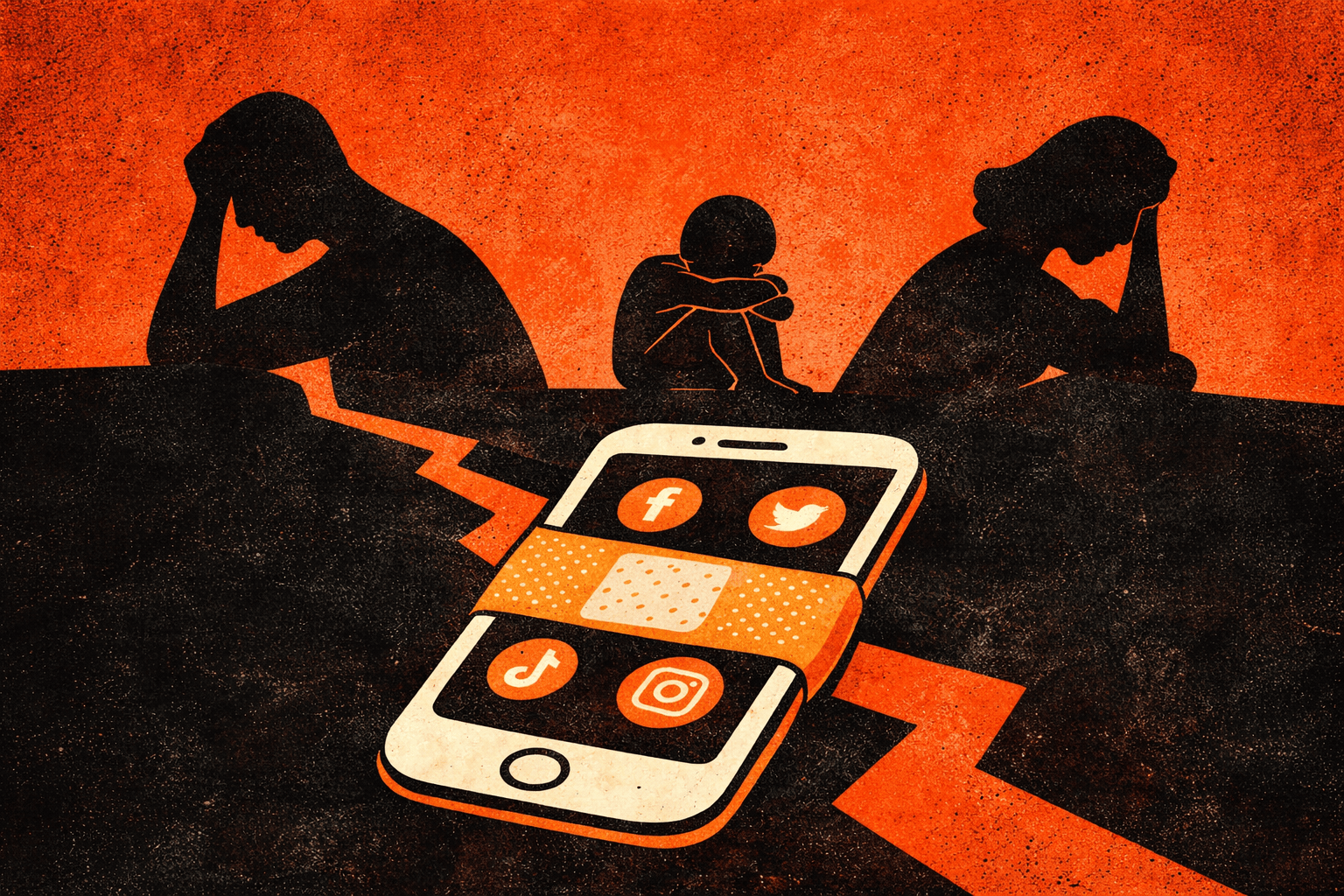
You can delete Instagram. You can put your screen in grayscale. You can do the digital detox and go forest bathing in the nude like a newly redeemed woodland creature.
Then you get home and you feel exactly the same.
Sometimes worse, because now you do not even have the numbing agent.
That’s the part nobody wants to say out loud.
If the phone was the problem, removing the phone would fix the problem.
It does not.
Here’s the unpopular answer.
Smartphones and social media are a bandage for people who could not reliably connect with other people anyway.
Not because they are defective. Because they were trained that way.
Why can’t so many people connect?
Connection is not a personality trait. It is a nervous system skill.
It is learned early, through a thousand tiny moments where a child is distressed and a parent meets them with steadiness. Not perfection. Just presence.
That is how your body learns: “I can have a feeling and still be safe with a person.”
A lot of us did not get enough of that.
Some parents were divorcing. Some were working double shifts and coming home empty. Some were drowning in their own unmanaged anxiety and old attachment damage they did not have language for.
So kids learned a different lesson.
“I should not need.” “My feelings are too much.” “Don’t reach. Don’t ask. Handle it alone.”
Or the opposite: “Panic harder so someone finally notices.”
You grow up and you are still trying to solve the same problem.
How do I regulate myself when people do not feel safe, reliable, or available? Then someone hands you a glowing rectangle that never rejects you.
Of course you grab it.
From Chapter 6:
“It’s not dopamine. It’s your nervous system looking for something it never learned to find in people.”
That is the whole story in one sentence.
The phone is a surrogate regulator
When your nervous system never learned co-regulation, you will find regulation wherever you can.
The phone works, but not in a healing way. In a suspension way.
Anxiety spikes, you scroll, it pulls you down. Numbness hits, you scroll, it pulls you up a little. You end up in a flat middle zone where you are not present, just occupied.
That is why people keep checking their phones even when it makes them feel worse.
It is not pleasure. It is escape from something that feels unbearable to touch directly.
The scapegoat cycle
Phones are convenient villains.
Parents get to say, “Big Tech ruined my kid.” Institutions get to say, “It’s screen time.” Everybody gets to avoid the older, uglier question.
What happened to the family? What happened to presence? What happened to adults who knew how to stay emotionally available?
The phone is not evil. It’s useful. It’s the painkiller.
Everyone argued about the painkiller. Nobody wanted to name the wound.
Next: Rat Park, and why environment beats willpower almost every time.
And now I can see the next scapegoat. It’s AI.
Same playbook. Blame the tool. Protect the wound.
What I want instead
I want us to stop moralizing the phone and start diagnosing the system.
If you feel “too much.” If you keep getting pulled toward unavailable people. If you are still up at 2AM wondering why you cannot stop checking your phone.
You are not weak. You are patterned, conditioned.
My book Dumb Parents, Smartphone is about that pattern. Where it comes from. How it changes. Not through perfection, but through a real protocol that interrupts the spiral and builds earned security over time.
The phone is not the villain.
Dumb Parents, Smartphone is available now on Amazon (ebook, paperback) and Tentary (PDF).